
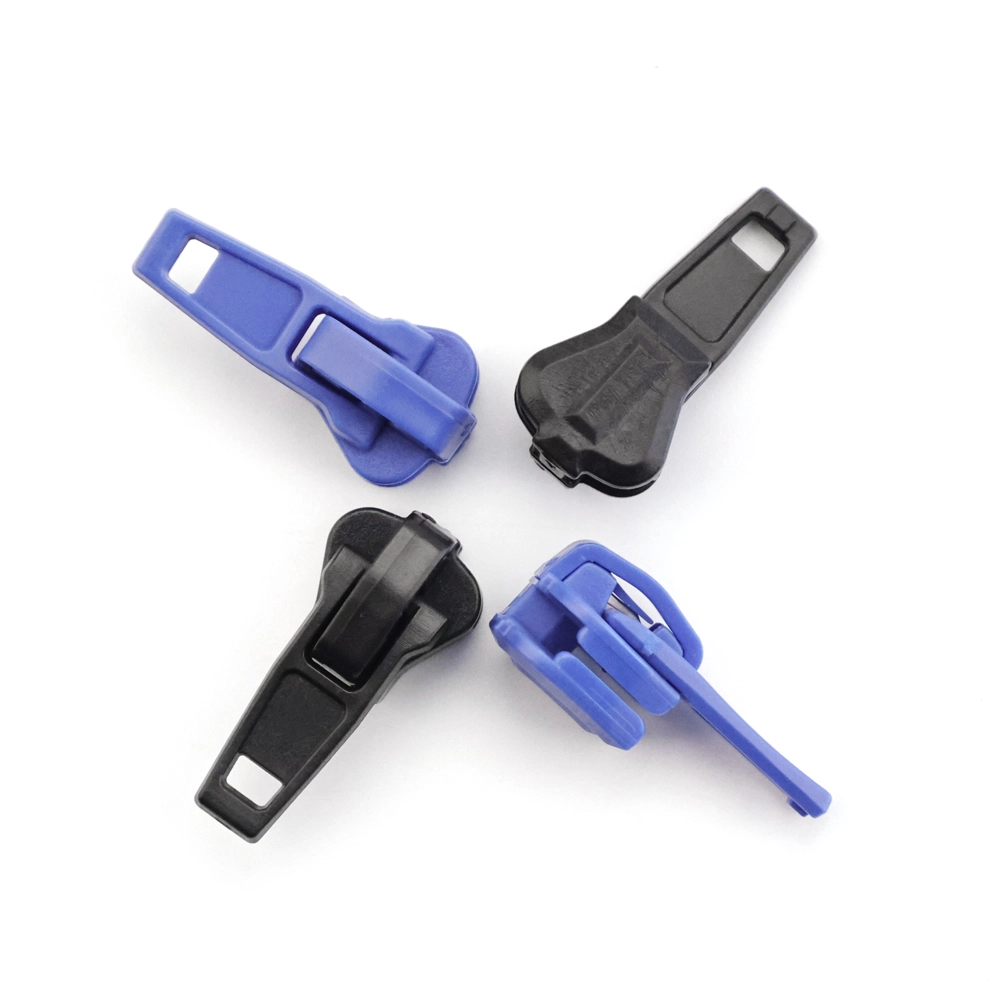
The cheapest way to lose a POM slider customer is color. A box of white sliders that yellows between batches, or a blue that changes when the resin lot changes, is rejected faster than any dimensional problem - and the cause is almost never the dye, it is the mixing and batch discipline around it.
This guide covers color and material control for POM sliders: how to weigh and mix masterbatch instead of estimating, how to control regrind, how to store resin and color, and the batch records that let you trace a color complaint back to the exact run.
Common Mistakes and How to Avoid Them
The pitfalls that show up most often in real projects, with the cause and the practical fix.
| Mistake | Why It Happens | Practical Fix |
|---|---|---|
| 1. Adding masterbatch by scoop | Batch-to-batch color drift and blocked flow | Weigh masterbatch for every batch and record the ratio |
| 2. No lot records | A color complaint cannot be traced | Record resin lot, color lot, machine and time |
| 3. Reusing regrind without ratio | Strength loss and color change | Define the ratio; label and rotate regrind containers |
| 4. Wet resin with light colors | Silver streaks and yellowing | Dry below 0.1%; never shortcut drying for white or pastel |
| 5. Drying too hot or too long | Yellowing on white and clear parts | Respect 80-100C and the 2-4 hour window |
| 6. Mixing materials in one hopper | Cross contamination between colors | Purge and clean between color changes |
| 7. Storing resin in sunlight | Color and property drift over time | Store sealed and away from direct light |
| 8. Judging color under workshop lamps | Different light changes the verdict | Use a standard light box against the approved sample |
| 9. Mixing old and new resin lots | Slight color difference between lots | Use FIFO and separate lots when color is critical |
| 10. No approved sample per order | Every inspector has a different reference | Keep an approved sample for every color order |
Best Practices That Hold Up in Production
The operating disciplines that separate a reliable line from a reactive one.
- Weigh masterbatch and record the ratio for every batch
- Dry resin below 0.1% with a fixed time-temperature schedule
- Define the regrind ratio and label all containers with time and date
- Purge the machine between color changes
- Store resin sealed, away from sunlight, with FIFO
- Compare color in a standard light box against the approved sample
- Keep resin lot, color lot, machine and time on every batch record
- Separate critical colors onto dedicated machines when possible
Implementation Roadmap
A practical sequence that can be adapted to your own project.
Working Data & Formula Notes
Color and material control data for POM sliders
Reference values from QLQ material notes; confirm drying and ratio recommendations with your resin and color suppliers.
| Component / Parameter | Working Value / Role | What Changes Mean (annotation) |
|---|---|---|
| Resin moisture target | <= 0.1% | Wet resin causes silver streaks and can shift light colors |
| Drying schedule | 80-100C for 2-4 hours | Too hot or too long yellows white and clear material |
| Masterbatch dose | Weighed per batch ratio | A scoop varies with density and compresses; weighing is repeatable |
| Regrind ratio | Defined per product | Too much regrind lowers strength and shifts color |
| Color assessment | Standard light box | Workshop lamps change the color verdict |
| Storage | Sealed, dry, no sunlight | Sunlight and humidity degrade color and flow |
| Batch traceability | Resin + color lot + machine + time | Without records a complaint becomes a negotiation |
Reference Data
Specifications and references cited in this guide. Confirm final parameters with your line supplier.
Masterbatch and regrind ratio planning
| Natural POM | No masterbatch; natural color | Drying still required |
| Light colors (white, pastel) | Low masterbatch %, strict drying | Most sensitive to moisture and over-drying |
| Medium colors | Standard ratio per supplier | Weigh per batch |
| Dark colors | Higher masterbatch % possible | Check flow; heavy loading can reduce strength |
| Regrind in standard parts | 10-20% typical controlled ratio | Verify strength and color each lot |
Batch record fields
| Order and size | Customer, slider size, color code | Links the record to the order |
| Resin lot | Supplier lot number | Trace raw material |
| Color lot | Masterbatch lot number | Trace color concentrate |
| Machine and mould | Machine ID and cavity count | Trace process location |
| Parameters | Temperature, pressure, cooling | Confirm the run was in range |
| Time and operator | Start time and responsible person | Accountability |
Color change procedure
| Prepare | Approved sample, clean hopper, clean regrind containers | Avoid cross contamination |
| Purge | Purge barrel and nozzle per material | Removes previous color |
| Dry | Fresh resin and masterbatch dried | Never run wet material |
| First pieces | Compare against approved sample | Adjust ratio only by small weighed steps |
| Record | Log the color change time and first-piece result | Traceability |
Implementation Cases
Case 1 - yellowing white sliders traced to over-drying
Situation. A POM slider factory in Poland produced white sliders that yellowed after storage and blamed the resin.
Approach. Drying logs showed some batches had been held at high temperature for 6-8 hours over weekends. The schedule was corrected to 90C for 3 hours with a maximum holding time, and white material was stored sealed after drying.
Outcome. The yellowing stopped and the factory introduced a maximum dry-hold time for light colors on all machines.
Case 2 - blue color complaint solved by batch traceability
Situation. A customer in Turkey rejected a blue slider batch for a color shift and asked for compensation.
Approach. Batch records showed the shift began after a regrind container from a different color had been used without full purging. The factory separated regrind by color and added a purge step to the SOP.
Outcome. The complaint was traced to a specific 20-minute window, the affected boxes were recalled, and the color control process was corrected.
Frequently Asked Questions
How should masterbatch be added to POM?
Weigh it per batch and record the ratio. Scooping varies with density and compression, which is the most common cause of batch-to-batch color drift.
Why does my white POM slider turn yellow?
White and pastel colors are sensitive to moisture and over-drying. Dry at 80-100C for 2-4 hours and never exceed the recommended dry-hold time; store dried material sealed.
Can I reuse runners and sprues for colored sliders?
Yes, but only at a defined ratio and with containers labeled by color and date. Uncontrolled regrind changes strength and color.
Why does color vary between resin lots?
Resin lots can differ slightly in base color. Keep FIFO, separate lots when color is critical, and compare against the approved sample before running a new lot.
What light should I use to check color?
Use a standard color light box with the approved sample. Workshop lamps change the color verdict between shifts.
Do I need a separate machine for each color?
Not always, but critical colors run better on dedicated machines or after a full purge. Schedule color changes in groups to reduce contamination risk.
How do I trace a color complaint?
Keep batch records with resin lot, color lot, machine, mould, time and operator. A good record turns a complaint into a correction.
Does drying affect color?
Yes. Wet resin causes silver streaks, and over-drying or overheating causes yellowing on light colors. Drying is part of color control, not just strength control.
What Would You Like to Solve?
Tell us the colors you run, your current drying practice and regrind handling, and we can help you build the weighing, recording and changeover routine that keeps color consistent batch after batch.
Published by QLQ - a complete high-quality zipper manufacturing equipment, moulds and materials solution supplier, and the only supplier in China covering the full process chain from raw material through electroplating and painting as one integrated system. Values cited are project references; confirm with your line supplier before specification.