
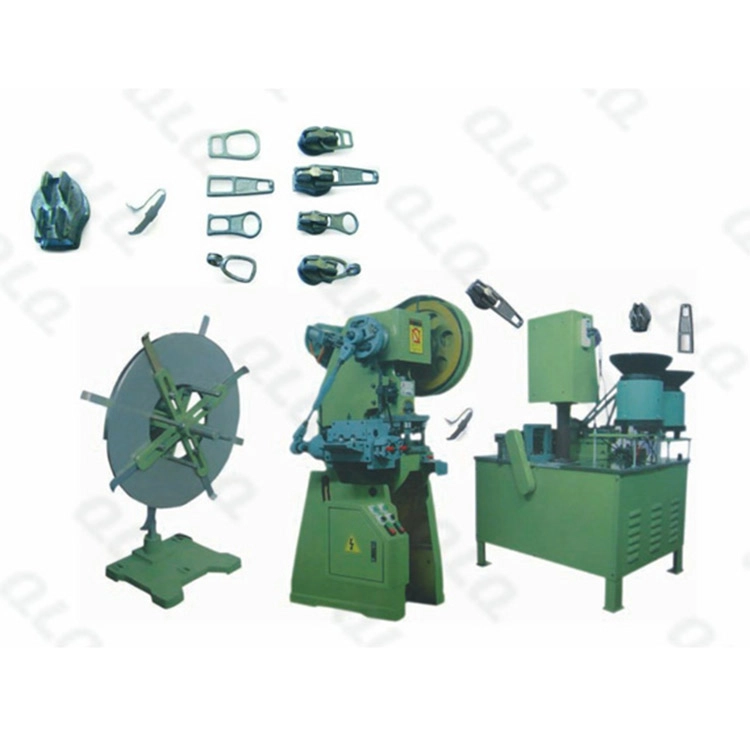
An injection machine can mold thousands of POM slider bodies an hour, but the slider is not finished until the puller is attached and, for auto-lock designs, the spring and lock pin are seated. Assembly is where many POM slider lines quietly lose their output advantage - parts jam in feeders, springs mix up, or the lock function fails at final test.
This guide covers POM slider assembly from components to finished product: what the assembly machine does, typical output ranges, feeding and orientation, the difference between semi-automatic and fully automatic lines, and the checks that keep the lock function reliable.

Common Mistakes and How to Avoid Them
The pitfalls that show up most often in real projects, with the cause and the practical fix.
| Mistake | Why It Happens | Practical Fix |
|---|---|---|
| 1. Molding output planned without assembly capacity | Molded parts pile up while assembly becomes the bottleneck | Match assembly stations to molding output |
| 2. Feeders not set for the exact part | Bodies and pullers jam or feed reversed | Set bowl and rail tooling per part; test orientation |
| 3. Springs mixed between types | Wrong lock force and intermittent failures | Separate spring types and label feeders |
| 4. No lock-function test | Auto-lock defects reach customers | Test lock and release on a sample per batch |
| 5. No puller retention check | Puller pulls out in use | Check retention force on a schedule |
| 6. Manual assembly without process control | Quality depends on the operator of the day | Use jigs, torque-limited tools and clear SOPs |
| 7. Ignoring static and dust | Small parts stick and jam in feeders | Control humidity, static and cleanliness at assembly |
| 8. No buffer between molding and assembly | One stop stops both | Keep labeled in-process buffer boxes |
| 9. Skipping first-article assembly check | A molding change can make assembly fail | Check first assemblies after every mold or material change |
| 10. No preventive maintenance on assembly machines | Worn rails cause intermittent jams | Maintain feeders, grippers and sensors on schedule |
Best Practices That Hold Up in Production
The operating disciplines that separate a reliable line from a reactive one.
- Balance assembly capacity with molding output
- Set feeder tooling per part and verify orientation
- Separate spring types; never mix in one feeder
- Test lock function and puller retention per batch
- Control dust, static and humidity at the assembly area
- Keep buffers between molding and assembly
- Run first-article assembly checks after every change
- Maintain feeders, grippers and sensors on schedule
Implementation Roadmap
A practical sequence that can be adapted to your own project.
Working Data & Formula Notes
Slider assembly working data
Reference values from QLQ slider production notes; actual output depends on part size, feeder design and automation level.
| Component / Parameter | Working Value / Role | What Changes Mean (annotation) |
|---|---|---|
| Assembly output | 60-120 parts/min on automatic machines | Lower values usually mean feeder jams, not machine speed |
| Daily output per station | 8,000-12,000 parts typical | Plan stations from molding output, not from brochures |
| Auto-lock components | Body + puller + spring + lock pin | Each added component raises jam risk and needs a test |
| Non-lock assembly | Body + puller only | Simpler and about 30% faster to assemble |
| Lock function test | Sample per batch | Catches spring and assembly errors early |
| Puller retention | Per drawing force range | Too weak pulls out; too strong stiffens the puller |
Reference Data
Specifications and references cited in this guide. Confirm final parameters with your line supplier.
Assembly machine types for sliders
| Semi-automatic assembly machine | Operator loads parts, machine presses | Small batches and multiple sizes |
| Automatic body + puller machine | Feeders assemble body and puller | Medium volume, non-lock sliders |
| Automatic spring assembly machine | Adds spring to lock-type body | Auto-lock sliders |
| Full auto-lock assembly line | Body + puller + spring + pin + test | High volume core sizes |
| Manual jig assembly | Hand assembly with jigs | Sampling and special designs |
Assembly quality checks
| First articles | After setup, material change and mould change | Full dimension and function check |
| Lock function | Sample per batch | Lock engages and releases correctly |
| Puller retention | Sample per hour or per schedule | Puller stays attached under force |
| Appearance | No scratches, contamination or flash | Visual per batch |
| Packaging count | Count and label per box | Prevents wrong counts |
Common assembly jams and fixes
| Body jams in feeder rail | Wrong rail width or burrs | Adjust rail; remove burrs in molding |
| Puller feeds reversed | Bowl orientation wrong | Correct bowl tooling and test |
| Springs double-feed | Spring separator worn | Check separator and spring quality |
| Lock pin not seated | Pin feeder misaligned | Align gripper; check pin dimension |
| Intermittent jams | Dust or static | Clean assembly area; control humidity and static |
Implementation Cases
Case 1 - auto-lock assembly output raised by feeder tuning
Situation. A POM slider factory in Bangladesh was molding 18,000 bodies a day but assembling only 8,000 because the auto-lock assembly machine jammed every few minutes.
Approach. Feeders were re-tooled for the exact body and spring, static control was added at the bowls, and a buffer of one hour was placed between molding and assembly. The spring separator was replaced on a fixed schedule.
Outcome. Assembly output rose to over 14,000 parts per day, matching the molding line, and the lock-function reject rate dropped.
Case 2 - intermittent lock failure solved by spring separation
Situation. A producer in Turkey supplied auto-lock POM sliders and received complaints about sliders that would not lock, but only in some boxes.
Approach. Batch testing showed the failures came from shifts when two spring types shared one feeder. Springs were separated by type, feeders were labeled, and a lock-function test was added to the QC sheet.
Outcome. Lock failures disappeared from the complaint log and the QC test caught any future mixing at the source.
Frequently Asked Questions
What does a POM slider assembly machine do?
It feeds the molded body and puller, presses them together, and on auto-lock designs adds the spring and lock pin. Fully automatic lines also test the lock function.
How fast is slider assembly?
Automatic assembly machines commonly run 60-120 parts per minute. Daily output per station is typically 8,000-12,000 parts, depending on size and design.
Why does my assembly machine jam so often?
Jams usually come from feeder tooling that does not match the part, burrs from molding, or dust and static on small parts. Fix the feeder and the environment before blaming the machine.
Do POM auto-lock sliders need special assembly?
Yes, they add a spring and lock pin. Each extra component increases jam risk, so feeders must be separated by type and the lock function must be tested.
How do I test the lock function?
Manually or with a test fixture, check that the lock engages when the puller is upright and releases when flat. Sample per batch and record the result.
Should assembly be manual or automatic?
For small batches and special sizes, manual assembly with jigs is flexible. For core sizes with steady volume, automatic lines give consistent output and lower labor cost.
Why do springs mix up on the line?
Different spring types look similar. Separate them by type, label feeders and never pour two types into one bowl.
How much buffer should I keep between molding and assembly?
At least half a shift of molded parts protects assembly from short molding stops, but keep buffers labeled and use FIFO so older parts are not forgotten.
What Would You Like to Solve?
Tell us your slider design, daily target and whether it is non-lock or auto-lock, and we can help you choose the assembly machine, set the feeder tooling and plan the tests that keep lock function reliable.
Published by QLQ - a complete high-quality zipper manufacturing equipment, moulds and materials solution supplier, and the only supplier in China covering the full process chain from raw material through electroplating and painting as one integrated system. Values cited are project references; confirm with your line supplier before specification.