
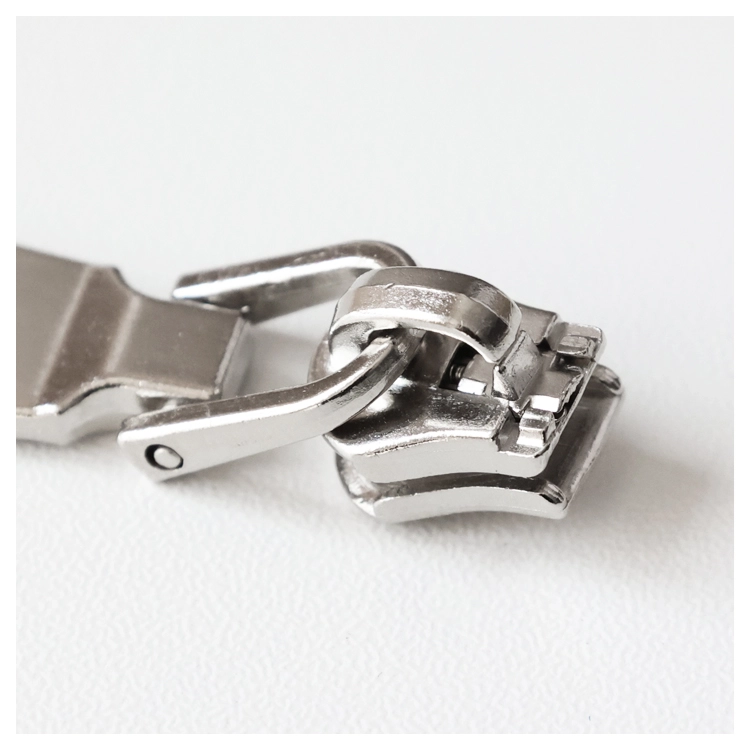
Three metal families dominate zipper sliders: zinc alloy, which die-casts into complex shapes at low cost; brass, which stamps and plates into premium hardware; and stainless steel, which resists corrosion and stands up to the hardest environments. Choosing between them is not about which is best, but about which fits the product, the price and the failure risk.
This guide compares stainless, zinc alloy and brass sliders across cost, strength, corrosion, finish and application, with the trade-offs an owner or buyer should weigh - and a decision checklist that prevents the wrong material reaching a marine product or a budget garment.
Common Mistakes and How to Avoid Them
The pitfalls that show up most often in real projects, with the cause and the practical fix.
| Mistake | Why It Happens | Practical Fix |
|---|---|---|
| 1. Choosing material by habit | The same material that suits a bag may fail on marine gear | Review environment and load for every product line |
| 2. Using zinc where corrosion matters | Plating wears and zinc corrodes in salt | Choose stainless for marine and harsh exposure |
| 3. Using stainless where cost dominates | Stainless raises cost with no benefit on cheap garments | Match material to the price point |
| 4. Confusing plating with material | Plated zinc can look premium but not last in salt | Look at the base material, not only the finish |
| 5. Ignoring strength needs | Heavy industrial use needs stainless strength | Check load and abuse of the final product |
| 6. Copying a brass part into stainless | Stamping, springback and die wear differ | Re-design and re-trial for stainless |
| 7. No salt spray test before material change | Corrosion claims are unproven | Run salt spray on the actual material |
| 8. Mixing materials in one production area | Zinc dust and brass particles contaminate stainless | Separate processes and tooling |
| 9. Selecting puller material separately | Puller corrosion ruins the slider appearance | Match the whole assembly to the environment |
| 10. Forgetting cost of corrosion failures | Returns and reputation cost more than the material | Price the failure risk, not just the piece |
Best Practices That Hold Up in Production
The operating disciplines that separate a reliable line from a reactive one.
- Choose material by environment, load and price point
- Use stainless for marine and harsh corrosion exposure
- Use zinc for low-cost complex shapes indoors
- Use brass for premium plated hardware in normal use
- Test salt spray before a material change
- Separate materials and tooling in production
- Match puller material to the environment
- Price the corrosion failure risk in the quote
Implementation Roadmap
A practical sequence that can be adapted to your own project.
Working Data & Formula Notes
Material comparison data for sliders
Reference guidance from QLQ product notes; exact cost depends on volumes, finish and market.
| Component / Parameter | Working Value / Role | What Changes Mean (annotation) |
|---|---|---|
| Zinc alloy | Die-cast; low cost; complex shapes | Plating needed for metal look; corrosion limited outdoors |
| Brass | Stamped and plated; premium look | Higher cost than zinc; needs plating for color |
| Stainless | Corrosion-resistant; high strength | Highest cost; natural or PVD finish common |
| Corrosion ranking | Stainless > plated brass > plated zinc in salt | Choose by the environment |
| Cost ranking | Zinc lowest; stainless typically highest | Match to the product price point |
| Strength | Stainless strongest | Heavy and safety use calls for stainless |
| Production | Zinc die-cast, brass/stainless stamped | Re-tool when changing material |
Reference Data
Specifications and references cited in this guide. Confirm final parameters with your line supplier.
Material comparison table
| Zinc alloy | Die-casting | Complex shapes, low cost | Garments, bags, light use | Lowest |
| Brass | Stamping + plating | Premium plated look | Premium bags and garments | Medium-high |
| Stainless | Stamping + passivate/PVD | Corrosion and strength | Marine, outdoor, safety | Highest |
| POM plastic | Injection molding | Light, colorful, low cost | Children, home, light bags | Low |
Application-driven material choice
| Standard garments | Zinc alloy | Cost-effective, normal indoor use |
| Premium plated hardware | Brass | Better base for bright plating |
| Marine and boat covers | Stainless 316 | Salt-water resistance |
| Outdoor and safety gear | Stainless | Strength and corrosion |
| Children and light textiles | POM plastic | Light, colorful, low cost |
Decision checklist before choosing
| Environment | Salt, humidity, washing, outdoor | Drives corrosion choice |
| Load | Garment vs heavy bag vs safety | Drives strength choice |
| Finish | Natural, plated, PVD, painted | Affects material options |
| Price | Target cost per slider | Filters the material list |
| Test | Salt spray and strength sample | Confirms the choice |
Implementation Cases
Case 1 - marine product moved from plated zinc to stainless
Situation. A supplier of boat accessories used plated zinc sliders and received corrosion returns within one season of salt exposure.
Approach. The product moved to stainless 316 sliders with a natural electropolished finish and passivation, with a 72-hour salt spray requirement on every lot.
Outcome. Corrosion returns stopped and the higher material cost was accepted because the failure cost was higher.
Case 2 - budget garment kept on zinc after cost review
Situation. A fashion buyer asked for stainless sliders on a low-price garment line, and the zinc-to-stainless cost increase would have removed the margin.
Approach. The review matched the material to the environment: indoor garment use with normal washing did not justify stainless, so the order stayed on zinc with a quality plating spec and salt spray check on the plating.
Outcome. The garment kept its price point and the supplier avoided an unnecessary material upgrade.
Frequently Asked Questions
Which slider material is best?
There is no single best material. Zinc alloy suits low-cost indoor products, brass suits premium plated hardware, and stainless suits marine, outdoor and safety use. Match the material to the environment, load and price.
Why is stainless more expensive than zinc?
Stainless strip, stamping dies, polishing and corrosion controls all cost more than zinc die-casting. The extra cost buys corrosion resistance and strength.
Does plated zinc look as good as stainless?
Plated zinc can look premium, but the plating wears and the base corrodes in salt. For harsh environments, choose stainless even if a plated look is similar at first.
Can I change a brass slider design to stainless?
Yes, but not by copying. Stainless has different springback, hardness and die wear, so the design and tooling must be re-trialled.
What material should marine sliders use?
Stainless 316 is the preferred choice for constant salt-water exposure. Confirm with salt spray testing on the actual parts.
When is zinc alloy the right choice?
Zinc is right for complex shapes, low cost and normal indoor use where corrosion risk is low. It is the standard for most garment and bag sliders.
How do I compare slider materials for a quote?
Compare environment, load, finish, price and test requirement. Run a salt spray sample and a physical sample on the chain before locking the spec.
Do I need to separate materials in production?
Yes. Zinc dust and brass particles can contaminate stainless and cause corrosion. Keep materials, tooling and media separate.
What Would You Like to Solve?
Tell us the product, environment, load and target price, and we can help you compare zinc, brass and stainless sliders with the right finish and test - and confirm the choice with a physical sample before you order.
Published by QLQ - a complete high-quality zipper manufacturing equipment, moulds and materials solution supplier, and the only supplier in China covering the full process chain from raw material through electroplating and painting as one integrated system. Values cited are project references; confirm with your line supplier before specification.