
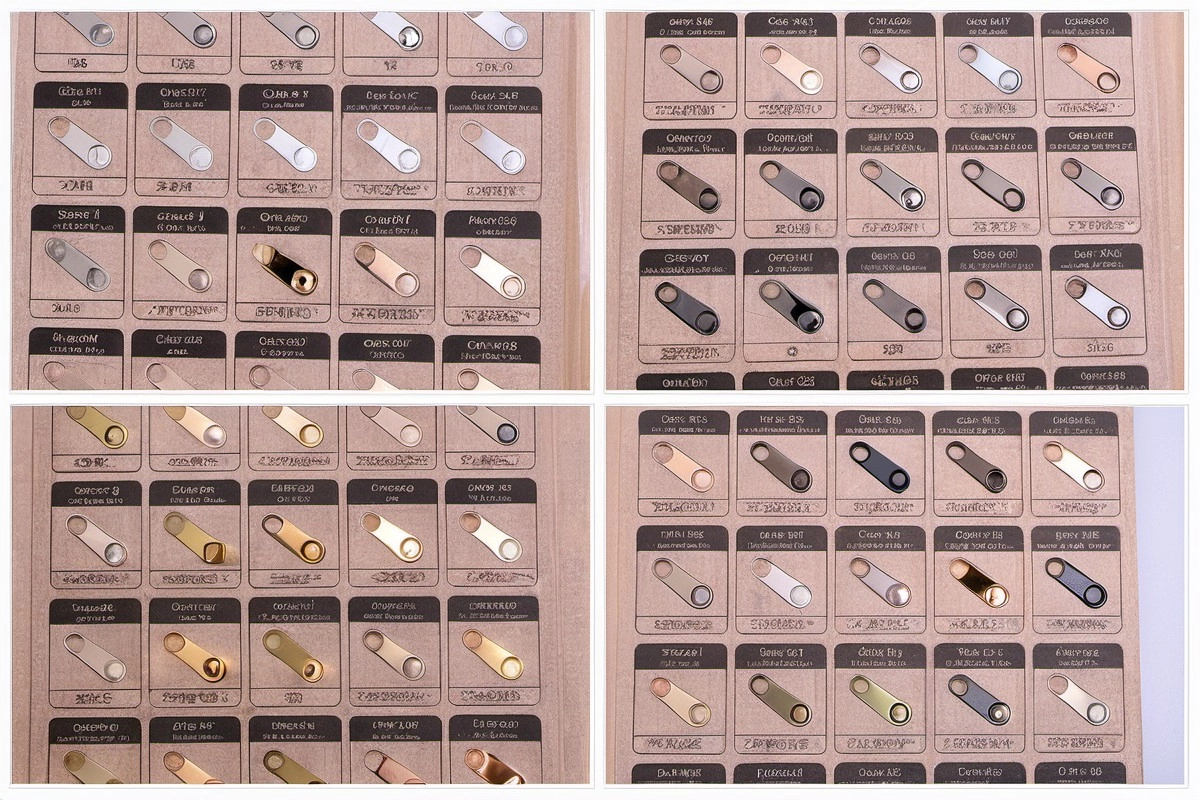
Most barrel-plating defects in zipper slider production are not caused by bad chemistry. They are caused by two settings that almost no one checks: barrel speed and loading volume.
After walking dozens of zipper factories, I keep seeing the same story: the plating bath is perfect, but sliders come out scratched, mottled, or missing coating. Here is the field-tested parameter guide I wish I had on day one.
Common Mistakes and How to Avoid Them
The pitfalls that show up most often in real projects, with the cause and the practical fix.
| Mistake | Why It Happens | Practical Fix |
|---|---|---|
| 1. Barrel speed too high | Thin zipper pulls and D-rings smash against the barrel wall and each other, creating bright streaks and deformation. | Start at the low end of the range and increase only when color uniformity is stable. |
| 2. Overfilling the barrel | Inner-layer parts never tumble to the surface, so electrolyte and current cannot reach them. | Keep load at 50 %–65 % of effective barrel volume for general sliders; 40 %–55 % for thin parts. |
| 3. Current density set in isolation | Current density must move with speed and load; a high load increases area variation and burns low-current zones. | Tune current density down as load increases, and up slightly as speed increases. |
| 4. Ignoring effective plated area | Beginners divide rectifier amps by total surface area instead of the actual exposed area inside the barrel. | Weigh the empty and loaded barrel, then use the effective plated area from your bath supplier. |
| 5. Changing three variables at once | When speed, load and current all change together, no one knows which caused the defect. | Change one parameter per trial and record a product-parameter card. |
| 6. Skipping the trial barrel | Operators copy a recipe from another factory without checking tumbling state on their own equipment. | Run a 1–2 barrel trial, dry the parts and inspect thickness before full production. |
| 7. Using the same speed for all coatings | Nickel, zinc and copper baths respond differently to agitation and current distribution. | Use the table ranges as a start, then adjust for plating type. |
| 8. No parameter records | Different operators run the same zipper slider with different settings, causing batch-to-batch color drift. | Record final settings on a product-parameter card attached to the work order. |
Best Practices That Hold Up in Production
The operating disciplines that separate a reliable line from a reactive one.
- Fix loading volume first, then set barrel speed, then adjust current density one step at a time.
- Weigh the barrel empty and loaded to calculate real load, instead of relying on visual estimation.
- Observe tumbling state: parts should roll freely without forming a stationary core.
- Use lower current density for complex shapes, blind holes and thin-walled zipper pulls.
- Run Hull cell tests when changing bath chemistry or introducing a new slider design.
- Record every trial on a product-parameter card that travels with the batch.
- Schedule weekly calibration of the rectifier ammeter and barrel tachometer.
- Split oversized batches rather than overfilling the barrel.
Implementation Roadmap
A practical sequence that can be adapted to your own project.
Working Data & Formula Notes
Barrel plating parameter interaction for zipper sliders
These values are starting ranges for common metal zipper finishing. Confirm with your bath supplier and equipment capability.
| Component / Parameter | Working Value / Role | What Changes Mean (annotation) |
|---|---|---|
| Barrel speed | 8–18 r/min | Too low = poor color uniformity; too high = scratches and deformation on thin pulls. |
| Loading volume | 40 %–65 % effective barrel volume | Too low = current burn; too high = inner parts miss coating. |
| Current density | 0.5–2.0 A/dm² effective area | Raising load raises area variation; lower current protects complex shapes. |
| Plating time | Nickel 30–60 min / Zinc 20–40 min | Time × current density controls thickness; verify with XRF. |
| Conductive media | 5 %–15 % by volume if used | Improves current transfer but reduces load space and may cause impact marks. |
| Bath temperature | Nickel 50–60 °C / Zinc 20–35 °C | High temperature brightens but accelerates additive breakdown. |
Reference Data
Specifications and references cited in this guide. Confirm final parameters with your line supplier.
Parameter reference by zipper slider type
| Small sliders / zipper pulls | 12–18 r/min | 50 %–60 % | 1.0–2.0 A/dm² |
| Medium dog clips / D-rings | 10–15 r/min | 55 %–65 % | 0.8–1.5 A/dm² |
| Thin sheet parts | 8–12 r/min | 40 %–50 % | 0.5–1.0 A/dm² |
| Irregular / holed parts | 10–14 r/min | 45 %–55 % | 0.8–1.2 A/dm² |
| Sampling / small batch | 6–10 r/min | 30 %–40 % | 0.5–0.8 A/dm² |
Implementation Cases
Wenzhou zipper-pull factory: scratches from overspeed
Situation. A nickel-plating line making zinc-alloy zipper pulls raised barrel speed from 10 to 18 r/min to increase throughput. Within three days batches came back bright-streaked and scratched, and the customer rejected them.
Approach. Speed was reduced to 12–14 r/min, current density returned to 1.2 A/dm², and load per batch was cut to 55 %.
Outcome. Scratch rate fell from 18 % to under 2 % within a week, and the rejected batch was not repeated.
Foshan slider factory: mottled color from overfill
Situation. A gun-black plating line kept seeing a few parts per batch turn dull and mottled. The electrician suspected unstable current, but the barrel was loaded to over 80 % of its height.
Approach. Load was reduced to 60 % and the batch was split into two runs.
Outcome. Per-barrel capacity dropped, but overall pass rate rose and rework fell, so net throughput improved.
Frequently Asked Questions
Can barrel speed be adjusted freely with a VFD?
Within the machine rating, yes. A practical range is 6–20 r/min. Too low and torque is insufficient; too high and bearings wear quickly.
How is current density measured for zipper sliders?
Read the rectifier amperage and divide by the total effective plated area inside the barrel, not the total surface area.
What is the most accurate way to judge loading volume?
Weighing is more accurate than eyeballing. Weigh the empty barrel, then weigh it loaded, and calculate the actual load percentage.
How long does barrel plating take for zipper parts?
Typical ranges: zinc 20–40 min, nickel 30–60 min, copper 15–30 min. Confirm with a Hull cell test.
Should conductive beads be added to the barrel?
Some thin parts benefit from a small amount of conductive media, but too many reduce loading space and may cause impact damage. Test first.
Is it better to record parameters in a notebook or a system?
Either is fine, but record consistently. The same slider adjusted by different operators should use the same product-parameter card.
Why do thin zipper pulls scratch more easily?
Thin walls deform under impact and high speed increases part-to-part contact. Use lower speed and lower load.
How do I know if the load is too high?
Open the barrel door during a trial run. If a stationary core of parts sits in the middle, the load is too high.
Can I use the same parameters for nickel and zinc?
No. Each bath has different throwing power and brightness response. Use the ranges as a start and adjust.
What is the fastest way to fix color drift?
Lock loading volume and barrel speed first. Most color drift comes from inconsistent mechanical conditions, not chemistry.
What Would You Like to Solve?
If your zipper plating line is struggling with color instability, scratching or missed plating, lock down barrel speed and loading volume first before blaming the bath. Tell me your slider type, plating metal and current barrel size, and I can help you set a starting parameter card.
Author: Ankus Qiu. QLQ supplies zipper making machines, slider moulds and finishing-line equipment for metal, nylon and plastic zipper factories. Values cited are project references; confirm with your equipment supplier before specification.