
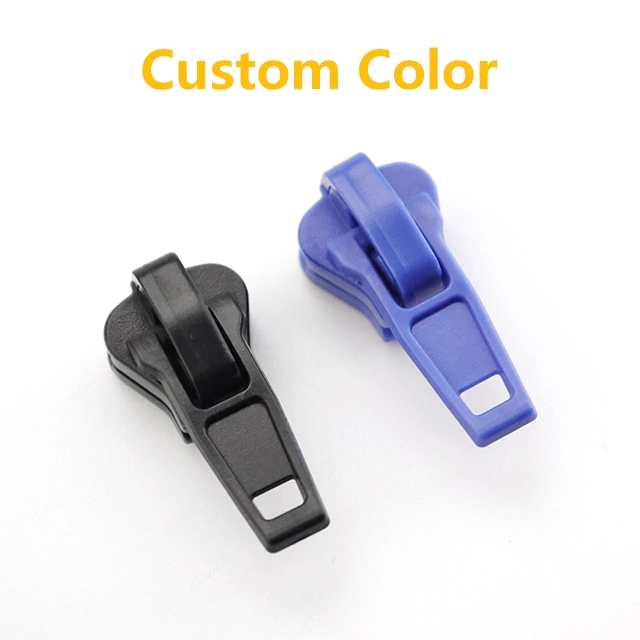
A slider is only as good as its match to the chain. A POM slider made for #5 nylon chain can feel loose on #3, bind on an injection-molded plastic chain of the same nominal size, or fail an auto-lock application if the wrong lock type is chosen. The size number is a starting point, not a guarantee.
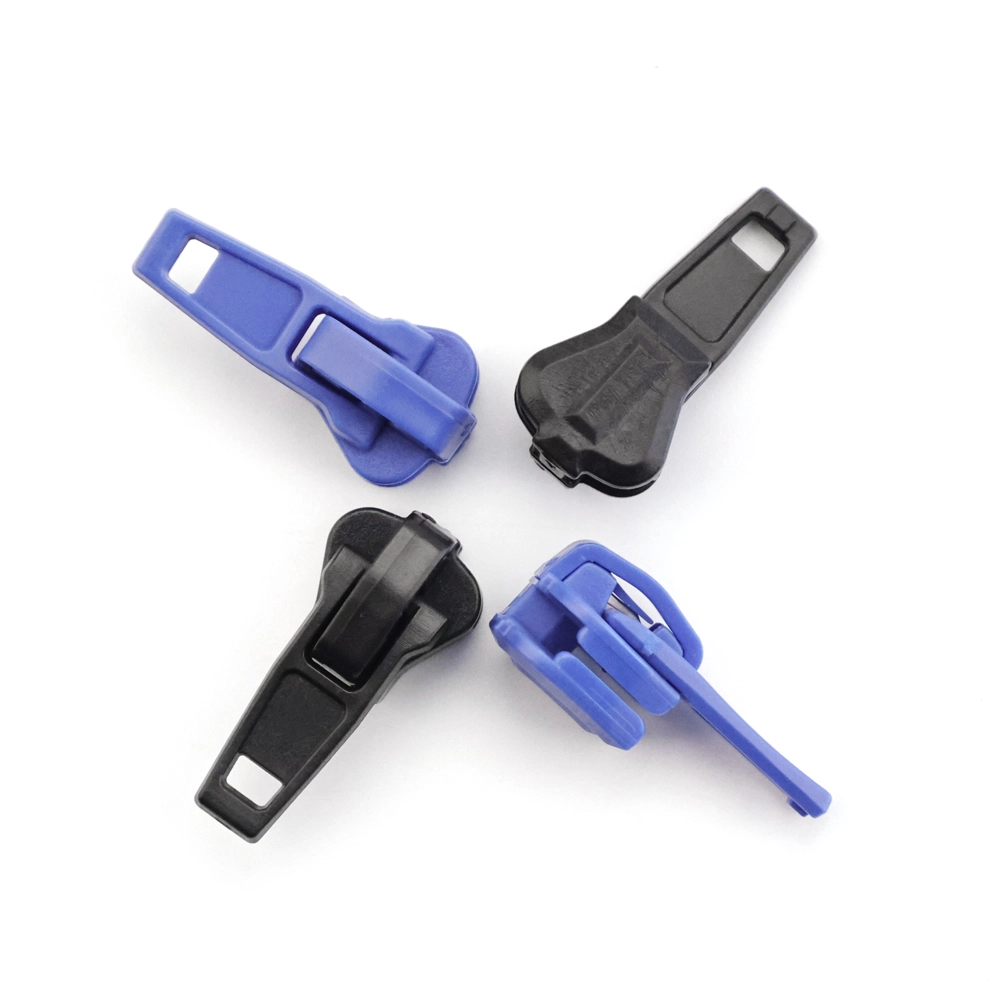
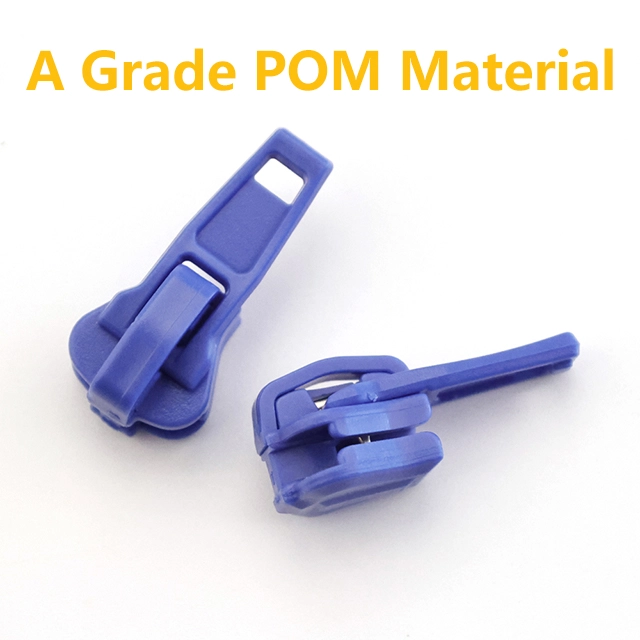
This guide explains how to select and match POM sliders: lock type (non-lock vs auto-lock), slide force expectations around 2.5 N or below for easy movement, chain size and tape thickness compatibility, and the applications where POM sliders work best - and where they should not be used.
Common Mistakes and How to Avoid Them
The pitfalls that show up most often in real projects, with the cause and the practical fix.
| Mistake | Why It Happens | Practical Fix |
|---|---|---|
| 1. Selecting by size number only | Different chain makers differ in tape and teeth geometry | Test the slider on the actual chain sample before ordering volume |
| 2. Using POM for high-load applications | POM strength is lower than metal sliders | Choose metal for heavy bags, industrial and safety use |
| 3. Ignoring the 80C limit | Hot washing or ironing can deform POM | Check the end-use temperature before selecting POM |
| 4. Wrong lock type for the garment | Auto-lock on a sport item can annoy; non-lock on a trouser pocket can open | Match lock function to the end use |
| 5. Slide force not tested | Rough sliders are rejected as defective | Test slide force and feel on the reference chain |
| 6. Mixing tape thickness assumptions | Heavy tape changes the channel load | Match tape width and thickness to the slider channel |
| 7. No puller length check for the product | Puller hits the seam or is too small to grip | Check puller size against the customer product |
| 8. Forgetting POM color can fade in strong light | Outdoor use may discolor | Confirm color fastness for the intended use |
| 9. Copying a metal slider drawing directly | Shrinkage and stiffness differ | Redesign for POM wall thickness and shrinkage |
| 10. No sample approval before mass production | Fit issues found after the order is made | Get an approved physical sample on the real chain |
Best Practices That Hold Up in Production
The operating disciplines that separate a reliable line from a reactive one.
- Always test the slider on the actual chain sample
- Match lock type to the end use, not to habit
- Check end-use temperature before choosing POM
- Test slide force and feel with the reference chain
- Confirm tape width and thickness compatibility
- Check puller size for the customer product
- Get an approved physical sample before volume production
- Record the approved chain and tape specification per order
Implementation Roadmap
A practical sequence that can be adapted to your own project.
Working Data & Formula Notes
Slider-to-chain matching data for POM
Reference guidance from QLQ slider notes; always confirm fit with the actual chain sample because nominal sizes vary between makers.
| Component / Parameter | Working Value / Role | What Changes Mean (annotation) |
|---|---|---|
| #3 chain | Fine teeth, light tape | POM slider channel must be narrow; test feel on real #3 chain |
| #5 chain | Standard garment and bag size | Most common POM slider size; verify with the actual chain |
| #8 chain | Heavier tape and teeth | POM works for light loads; check strength requirement |
| Slide force | Low force expected for easy movement | Rough feel usually means channel or tooth geometry mismatch |
| Lock types | Non-lock vs auto-lock | Auto-lock adds a spring and requires reliable lock function |
| Temperature limit | POM service below about 80C | Hot ironing and severe washing can deform POM parts |
| Strength note | POM lower than zinc/brass/stainless | Heavy and safety applications need metal sliders |
Reference Data
Specifications and references cited in this guide. Confirm final parameters with your line supplier.
Lock type selection by application
| Non-lock (free-running) | Slider moves freely | Sportswear, casual, simple bags |
| Auto-lock | Locked until puller lifted | Trousers, luggage, closures that must stay shut |
| Pin-lock variants | Special locking structures | Specific customer designs |
| Double-slider use | Two sliders on one chain | Two-way opening bags and garments |
POM slider application matrix
| Childrenswear | Light, colorful, safe | POM is a common choice |
| Home textiles | Cushions, bedding bags | POM works for light duty |
| Sport and outdoor light gear | Light bags, covers | Check sunlight and temperature |
| Garment closures | Jackets, trousers | Match lock type to the product |
| Heavy bags / workwear | High load | Use metal sliders instead |
| Marine / safety | Corrosion and strength | Use stainless steel sliders |
Approval checklist before mass production
| Chain sample | Real chain of the final size and maker | Fit test passed |
| Tape spec | Width and thickness recorded | Channel compatible |
| Slide feel | Force within target | No rattling, no binding |
| Lock function | Engages and releases correctly | Sample tested |
| Puller fit | Size and retention per product | Approved by customer |
| Color | Against approved sample | Approved |
Implementation Cases
Case 1 - rough #5 slider fixed by testing the actual chain
Situation. A customer in Poland supplied POM sliders made to #5 drawing but reported rough movement on the chains they actually bought from a different tape maker.
Approach. The factory asked for the real chain sample and found the teeth profile differed slightly from the reference. The channel dimension was adjusted and the new sample approved on the actual chain.
Outcome. The slide feel passed on the customer chain, and the specification now records the exact chain maker and tape spec with each order.
Case 2 - wrong lock type changed for a trouser order
Situation. A garment buyer ordered auto-lock POM sliders for lightweight trousers but the factory had quoted non-lock out of habit, causing customer returns for openings.
Approach. The design review moved the order to auto-lock POM with spring assembly, added a lock-function test, and updated the internal size-select table to tie lock type to end use.
Outcome. Returns stopped, and the factory now confirms lock type in the order review before molding.
Frequently Asked Questions
How do I know which slider size fits my zipper?
The nominal size (#3, #5, #8) is a starting point. Fit depends on the actual chain teeth, tape width and thickness. Always test the slider on the real chain sample before mass production.
Is POM strong enough for all zipper applications?
No. POM is lighter and cheaper than metal but lower in strength and limited to service below about 80C. Heavy bags, workwear, marine and safety applications need metal sliders.
What is the difference between non-lock and auto-lock sliders?
A non-lock slider moves freely; an auto-lock slider locks the chain until the puller is lifted. Choose by end use: sportswear often uses non-lock, trousers and luggage usually need auto-lock.
How smooth should a POM slider feel?
Slide force should be low enough for easy one-finger movement without rattling. If the slider binds, check the channel geometry against the real chain; if it rattles, the channel is too loose.
Why does the same size slider feel different on different chains?
Nominal sizes vary between makers and tape types. Teeth profile, tape width and thickness all change the fit, so test on the actual chain.
Can POM sliders be used outdoors?
They resist rust, but strong sunlight can fade colors and heat can deform parts. Confirm color fastness and temperature limits for the intended use.
Should POM sliders be used on waterproof chains?
If the chain is coated, check that the slider channel matches the coated thickness. POM itself is fine on light coated chains, but always fit-test the coated product.
Why does my customer ask for a physical sample?
A drawing cannot show slide feel and fit. A physical sample on the real chain confirms size, lock function, puller and color before you commit to volume.
What Would You Like to Solve?
Send us your zipper chain sample, end product and target price, and we can help you choose the right POM slider size, lock type and puller - and verify fit with a physical sample before you order volume.
Published by QLQ - a complete high-quality zipper manufacturing equipment, moulds and materials solution supplier, and the only supplier in China covering the full process chain from raw material through electroplating and painting as one integrated system. Values cited are project references; confirm with your line supplier before specification.